Tattoo ideas, by real-life situation
Guides built around who you are and where you want it, with the craft details most idea lists skip: how it ages, what size it needs, what it costs you at work.
Start from the constraint, not from the drawing
Most idea pages are galleries. You scroll two hundred images, save nine, and turn up at a studio with a folder that has no common thread. It rarely works, and the reason is structural: a tattoo is not chosen the way a poster is chosen. A drawing that looks finished on a screen still has to survive three things a screen never shows you. It sits on a curved surface. It moves with a body. And it is put into living skin that keeps changing for the next thirty years.
Every guide below starts from one of those constraints instead of from a motif. That is the whole difference. Once you know how much room your idea needs, where you can carry it, and what it will look like when it softens, the drawing becomes the easy part.
What you can show, and where
Visibility is a decision you make once and then live with every working day. Hands, neck and face are still career decisions in a lot of fields, and no amount of goodwill about tattoos changes what a given industry does at interview stage. The coverable zones are the inner forearm, the upper arm, the ribs, the thigh, the shoulder blade and the upper back. The useful question is not whether your workplace is relaxed. It is what you actually wear in July, not in January, and whether you are happy explaining the piece to a stranger who asks.
How much room the idea really needs
Detail density is the real size limit, not width in centimetres. Ink spreads very slightly under the skin over the years, so two lines set too close together will eventually read as one thicker line. That single fact explains most disappointing small tattoos. A portrait the size of a coin loses its features because the spacing between its internal lines was never large enough to survive that spread, while the same portrait on a forearm holds up fine. If your concept only makes sense with fine internal detail, you have two honest options: scale the whole piece up, or simplify it until the remaining lines can breathe.
How it will look in ten years
Two forces age a tattoo: sunlight and friction. The outer forearm, the hands, the feet and the shoulders take the most sun. Fingers, palms and the inside of the wrist take the most rubbing. Solid black holds the longest, a confident mid-grey holds well, and very pale grey wash and delicate colour are the first things to go soft. None of this argues against fine work. It argues for putting fine work somewhere sheltered and accepting that a hand tattoo is a piece you will maintain.
What people actually ask for
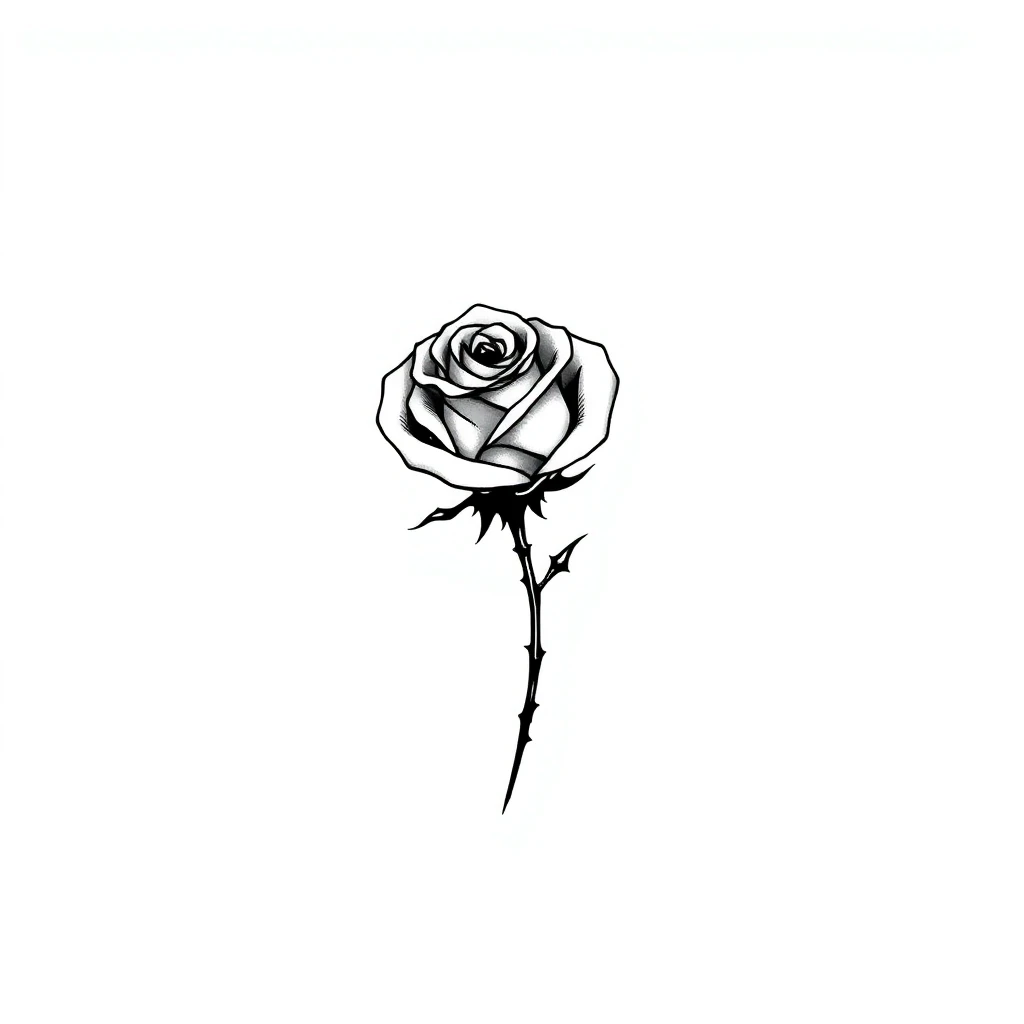
According to the Tatua observatory, which looks at what people describe when they set out to design a tattoo, 88% of requests are for black and grey rather than colour, and 94% are for a small format. The style split is led by minimalist work at 29%, blackwork at 24%, lettering at 21% and fine line at 19%. Those families overlap, since a small fine line piece is often minimalist too.
Read together, that distribution is less a fashion than a summary of the constraints above. People are converging on small, black, low-detail work because it is the combination that survives sun, friction and time while staying coverable at work. It is worth knowing that before you decide your idea has to be unusual to be good.
| Family | Share of requests | What it demands of you |
|---|---|---|
| Minimalist | 29% | Ruthless editing. Every line left in has to earn its place, because there is nothing to hide behind. |
| Blackwork | 24% | Commitment. Large solid areas are the hardest thing to cover or rework later. |
| Lettering | 21% | Certainty about the exact words, and a sheltered placement so thin strokes stay separate. |
| Fine line | 19% | A low-friction spot and an artist who does this specific work every week. |
Figures from the Tatua observatory. Families overlap, so the shares do not add up to a hundred.
The guides, grouped by the decision you are making
You know roughly who you are, not what you want
Start broad and narrow down. Tattoo ideas for women and tattoo ideas for men are organised by placement and scale rather than by cliché, so you can see what a given zone realistically takes. If this is your first piece, the first tattoo guide covers booking, deposits, what the session feels like and healing.
You know the constraint you are working around
If it has to stay invisible in a shirt, read small and discreet tattoos. If you have already chosen the arm, forearm tattoos covers the difference between the sheltered inner side and the sun-exposed outer side. If longevity is your main worry, tattoos that age well is the one to read before you commit to anything delicate.
You know the style or the scale
Fine line tattoos explains where that work holds and where it does not. Planning a sleeve is about sequencing several sessions so the finished arm looks like one piece instead of a collection.
The tattoo has a reason behind it
Memorial tattoos deals with the pieces that carry the most weight, including why a name and a date is so often the choice people revisit. Couple tattoos argues for two complementary designs over one duplicated design, and explains what happens to each if life goes differently than planned.
Meaning comes after the constraints, not before
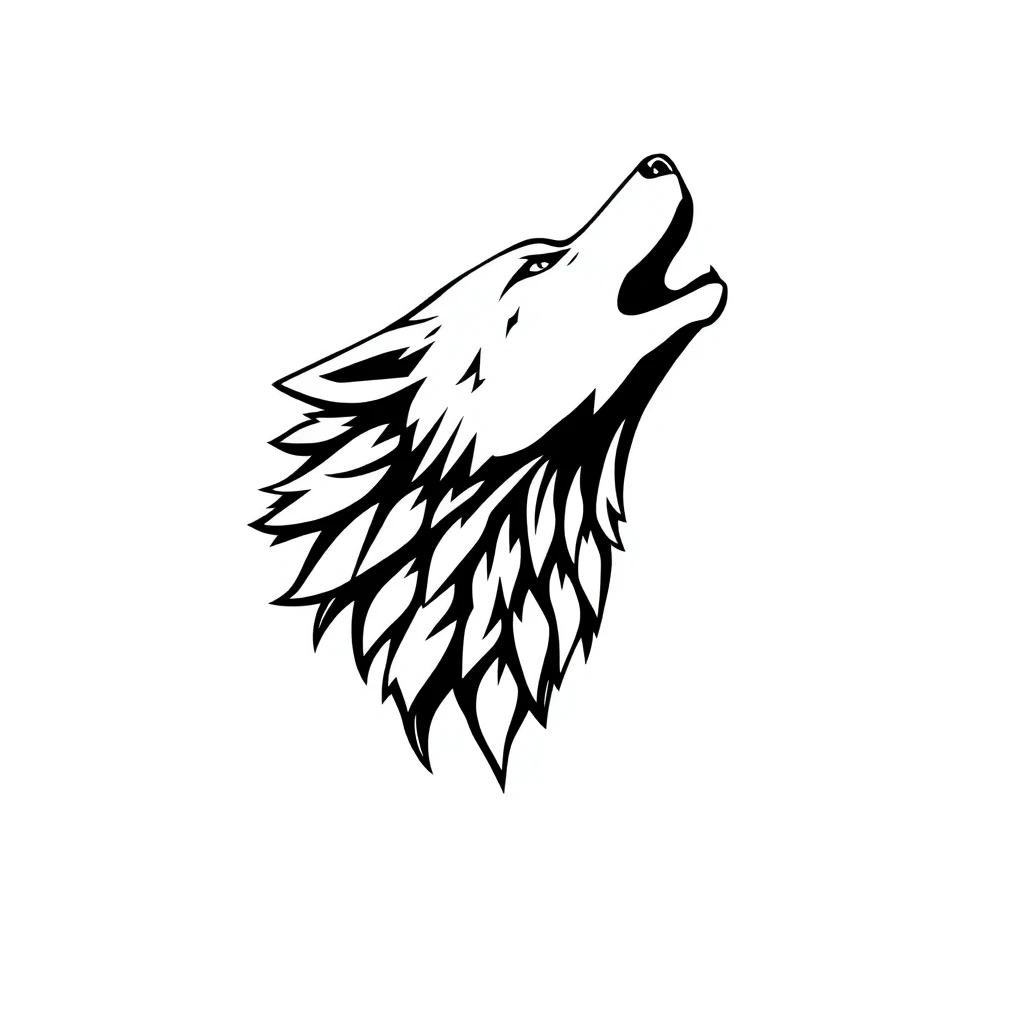
Once you know the size, the zone and the style, choosing the subject gets much easier, because most of the field has already been eliminated. Our tattoo meaning guides trace each symbol back to the traditions it came from, including the places where those traditions disagree with each other. The wolf, the snake and the moon are good places to start, because all three carry more than one reading and the design decides which one a stranger sees.
See it on your skin before you book
Reading about scale is useful. Seeing your idea at the right size, on the actual spot you are considering, settles the argument faster. Tatua turns a description into a design and gives you a preview on your skin from your own photo, which is the quickest way to find out that a piece you imagined on your forearm is really a shoulder piece. Take that image to a tattoo artist as a starting point for the conversation, not as a file to be copied: the artist adjusts line weight and spacing for how your skin will actually hold ink.
Try your idea in the Tatua app, or read our comparison of AI tattoo generators if you want to see how the tools differ before you pick one.
Frequently asked questions
Can I try it for free?
Yes. Try it free: leave your email, the AI draws your design and sends it to your inbox, no card required. After that, unlock your creations in HD from $1.99. Trying a design on your own photo and the stencil are paid options.
How do I choose a tattoo when nothing feels certain?
Decide the constraints first, in this order: where it goes, how big it can be, and whether it needs to be coverable. Those three answers remove most options for you. Only then pick the subject. People who start with the subject tend to spend months comparing images that were never going to work at the size they had in mind.
Is a small tattoo a safe first choice?
Usually, and it is what most people ask for: 94% of requests in the Tatua observatory are small format. The trap is asking for a small version of a detailed design. Small works when the design was conceived small, with few elements and generous spacing between lines. It fails when it is a shrunken copy of something busy.
Should I bring a reference image to a tattoo artist?
Yes, and bring more than one. A single image invites a copy, which is both a weaker tattoo and a problem if the original is another artist's work. Three or four references, plus a sentence about what you want the piece to say, gives the artist enough to design something that belongs to you and suits your placement.
Colour or black and grey?
Black and grey is the safer default and it is what 88% of requests ask for, according to the Tatua observatory. Black keeps its edge the longest and is easier to rework later. Colour can be superb, but it asks more of you: a sheltered placement, real sun discipline, and an artist whose healed colour work you have seen in photographs taken years after the session, not the day of.