What tattoo symbols actually mean
Most meaning articles hand you a list of adjectives that would fit any animal. These trace each symbol to the traditions it came from, where they contradict each other, and what the motif needs in size, style and placement to still read decades later.
Why most meaning lists tell you nothing
Open almost any page about tattoo symbolism and you get the same four words attached to every animal: strength, freedom, loyalty, protection. A list that says a wolf means loyalty and a lion means strength and an eagle means freedom has not told you anything, because you could swap the labels around and no reader would notice. That kind of writing exists to fill a page, not to help you decide.
A symbol is worth carrying when you know three things about it: where the meaning came from, what makes it shift, and what the drawing has to do for that meaning to still be legible to you in twenty years. That is what these guides are built around.
Where a meaning actually comes from
The tradition behind it
Most symbols carry more than one history, and those histories often disagree. The dragon is a benevolent water and rain spirit across much of East Asian tradition, and a hoarding, hostile beast in most of the European material. The snake is renewal in one reading, healing in another, and temptation in a third. Neither reading is the correct one. What matters is that you know which tradition you are standing in, because a viewer familiar with the other one will read your tattoo differently than you intended.
The choices inside the drawing
This is the part almost nobody writes about, and it is the part that decides what people see. A koi swimming upward is the struggle still in progress; swimming downward, it is the goal reached, or in some readings the struggle abandoned. A rose with thorns is not the same statement as a rose without them. A closed compass is not an open one. The subject sets the theme, but the details inside the drawing set the sentence.
What you bring to it
Private meaning is legitimate and it is usually the most durable kind. A moon that marks a specific night, a raven that belongs to one person's grandmother, a semicolon that stands for a sentence that did not end. You do not owe anyone an explanation. The only thing worth checking is that your private meaning does not collide head-on with a well-known public one, because you will be answering questions about it for the rest of your life.
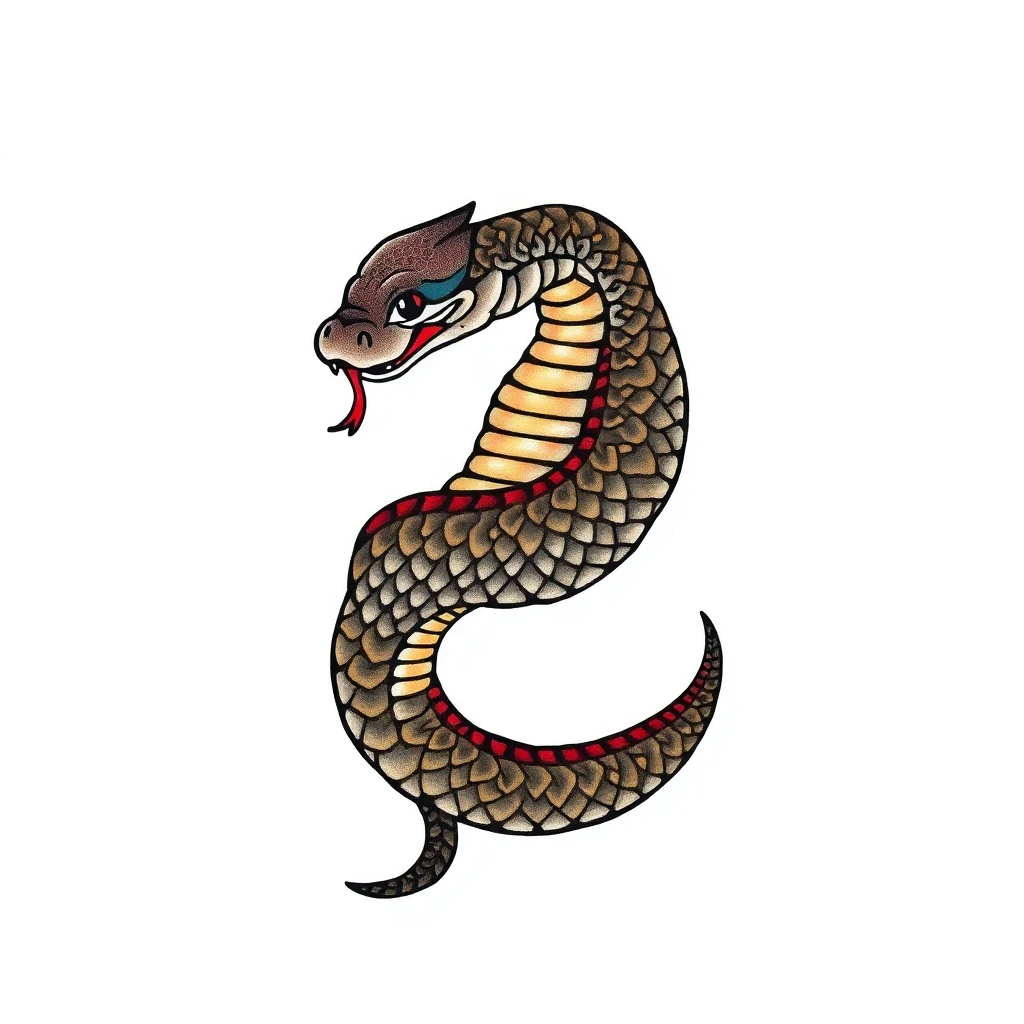
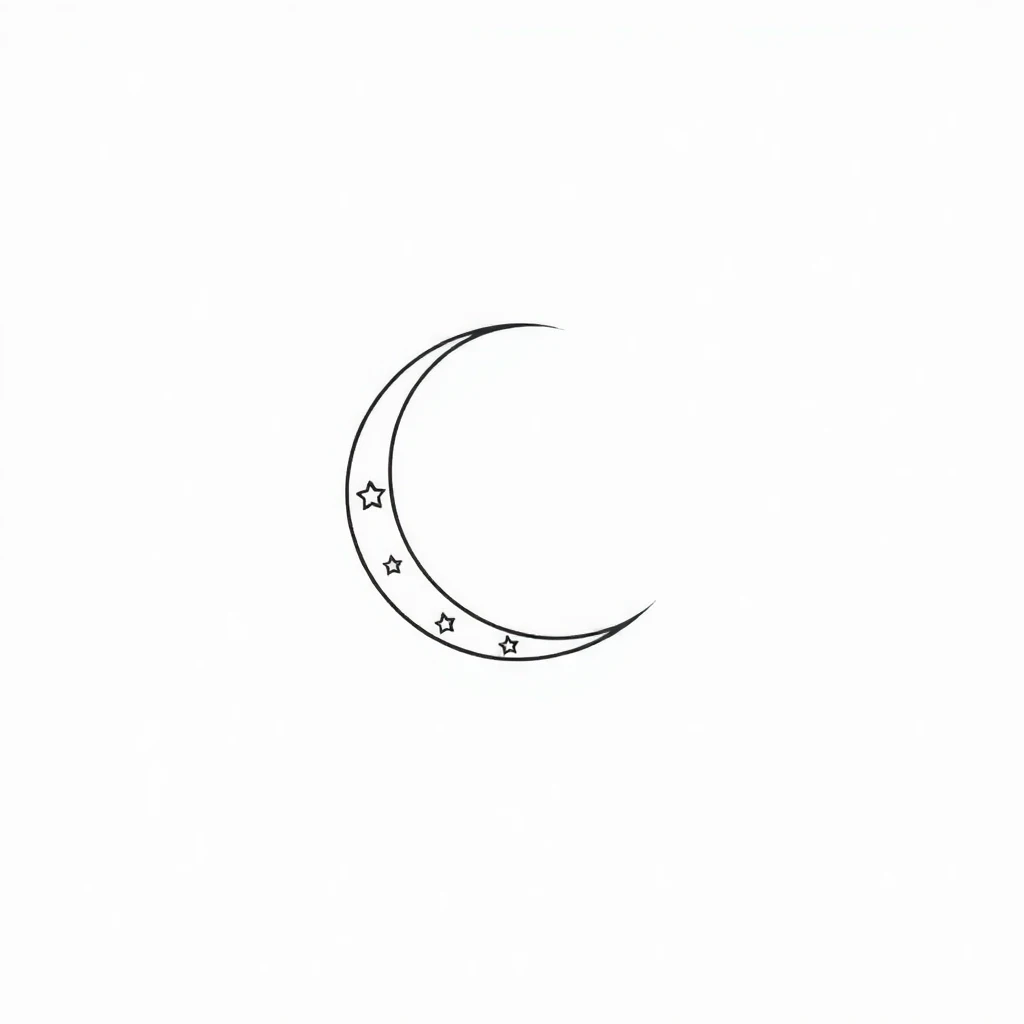
Small details that flip the reading
| Motif | The detail | What changes |
|---|---|---|
| Koi | Direction of swim | Upward reads as the struggle still under way, downward as the goal reached or given up on. |
| Rose | Thorns kept or removed | With thorns, love that cost something. Without, something closer to pure tribute. |
| Compass | Needle fixed or free | A fixed needle is a person who knows their direction. A free one is someone still looking. |
| Snake | Coiled or moving | Coiled reads defensive and guarded, moving reads as change under way. |
| Moon | Single phase or a series | One crescent is a moment. A run of phases is a cycle, and takes far more room to do well. |
A meaning survives only if the tattoo stays readable
Symbolism is worthless if nobody, including you, can make out what the drawing is in fifteen years. Ink spreads slightly under the skin over time, so lines that were set close together gradually merge. A mandala crammed into a two-centimetre circle becomes a grey disc. A wolf whose whole character lives in fine fur detail becomes a vague grey animal. The meaning does not fade because the symbol was weak, it fades because the drawing was denser than the space allowed.
This is why the style figures from the Tatua observatory are worth knowing when you choose a symbol. Minimalist work accounts for 29% of requests, blackwork 24%, lettering 21% and fine line 19%, while 88% of all requests are black and grey and 94% are small format. Small and black is the dominant combination, and it rewards symbols with a strong silhouette. A crescent moon, a snake, a mountain and an arrow all survive being small because you recognise them from their outline alone. A detailed portrait or a dense mandala does not.
Script and symbols from cultures that are not yours
Two different cautions get confused here, and only one of them is about etiquette.
The first is factual and it is the one that ruins tattoos. Never get a word tattooed in a script you cannot read. Arabic, Chinese, Japanese, Hebrew, Sanskrit, Greek, Thai and Cyrillic all get tattooed from machine translations and from fonts that quietly break the writing. Arabic letters change shape depending on their position in a word and must be joined, so a design that renders them as separate disconnected shapes is not a word at all. Chinese characters can be near-identical to one another and mean entirely different things. A translation engine cannot tell you which of several senses a character carries, and it will never tell you it got it wrong.
Before that design goes anywhere near a needle, have the exact text checked by a native speaker who can see the final artwork, not just the words typed out. Ask them two things: does it say what I think it says, and is it written correctly as an image. A tattoo is permanent and a translation error in it is not a small embarrassment, it is a correction that costs laser sessions. Treat any script you cannot proofread yourself as unverified until a person confirms it.
The second caution is about respect. Some symbols are ordinary decoration in their culture of origin and some are closed, meaning they are earned, restricted to initiates, or tied to a specific religious function. If you are drawn to a motif from a living tradition, spend an hour finding out which of the two it is. The answer is usually easy to find and it saves you from wearing something that reads as thoughtless to the people it belongs to.
The guides
Symbols with a contested reading
These are the ones where the tradition you pick genuinely changes the message: the dragon, the snake, the raven and the koi fish.
Symbols people think they already understand
The wolf is about the pack far more than the loner. The lion carries protection as much as dominance. The butterfly and the rose are both far older and stranger than their reputation suggests.
Symbols that mark something personal
The semicolon, the phoenix, the compass and the moon tend to be chosen after something happened rather than before.
If you have the symbol but not the format, our tattoo idea guides cover placement, scale and how different work ages, including which designs stay readable and what a discreet piece can realistically hold.
See the symbol on your skin before you commit
Once you have settled on a symbol and the details that give it your reading, the useful next step is seeing it at the right size on the spot you have in mind. Tatua turns a written description into a design and shows you a preview on your skin from your own photo. It is the fastest way to discover that a symbol you pictured on your wrist needs a forearm to keep its detail. Bring the result to a tattoo artist as a conversation starter rather than a file to copy, since the artist is the one who adapts spacing and line weight to your skin.
Design your symbol in the Tatua app, or read the comparison of AI tattoo generators first.
Frequently asked questions
Can I try it for free?
Yes. Try it free: leave your email, the AI draws your design and sends it to your inbox, no card required. After that, unlock your creations in HD from $1.99. Trying a design on your own photo and the stencil are paid options.
Does a tattoo have to mean something?
No. Plenty of good tattoos exist because someone liked the drawing, and there is no obligation to justify a piece of art on your own body. Meaning matters mainly when you want the tattoo to say something specific to you later, or when you are choosing between two designs and need a tiebreaker.
Can one tattoo carry two meanings at once?
Yes, and most of the strongest ones do. A snake can be renewal to you and medicine to your family, and both readings sit comfortably in the same drawing. The trouble only starts when the two meanings actively contradict each other, because then the details of the design have to pick a side whether you want them to or not.
Is it safe to get a word tattooed in another language?
Only after a native speaker has checked the final artwork, not just the words. Machine translation gets senses wrong, and ordinary fonts often break scripts such as Arabic by separating letters that must be joined. Ask a person who reads the language to confirm both the meaning and that the writing itself is correctly formed. This is the single most common irreversible mistake in lettering.
Which symbols work best as a small tattoo?
The ones you can recognise from their outline alone: a crescent moon, a mountain, an arrow, a snake, a simple compass rose. With 94% of requests in the Tatua observatory being small format, this is the practical question for most people. Anything whose character lives in fine internal detail, such as a portrait or a dense mandala, needs real space or it turns into a grey shape.